2.1. MITIGATION MEASURES: EXISTING OPTIONS > STRUCTURAL INTERVENTIONS
These measures are incorporated into road design through engineering works specifically intended for wildlife, or through adaptations to standard construction practices, with the aim of providing safe conditions for wildlife movement or protection.
Wildlife underpasses
Wildlife underpasses are the most widely used structures built specifically for fauna on Brazilian roads and can serve a broad range of terrestrial and semi-aquatic species, including bats (GAISLER et al. 2009). To maximize effectiveness, they should be located along preferred wildlife movement routes, which depends on an adequate baseline assessment. Underpasses generally have significantly lower temperatures than the surrounding environment; this may attract animals seeking thermal regulation and consequently favor crossing use (ASCENSÃO & MIRA 2007; CAIN et al. 2003). Although it is often suggested that wildlife crossings could become preferential predation sites for carnivores, studies addressing this issue have not demonstrated such an effect (ARESCO 2005). Natural lighting is desirable because it can allow vegetation to develop and make the structure more attractive to wildlife. This can be achieved by increasing structural openness or by providing overhead openings (CAIN et al. 2003), particularly at the median of divided highways. Maintaining vegetation near the entrances as a guide for wildlife is also strongly recommended (CLEVENGER & WALTHO 2000; GRILO et al. 2008). Siting should prioritize areas with high potential or confirmed permeability for wildlife, identified as movement corridors and subject to little human disturbance (CLEVENGER & WALTHO 2000; GRILO et al. 2008; MATA et al. 2008). Structures close to urban areas tend to be used more frequently by human-associated species; therefore, locations farther from urban influence are preferable when the objective is to favor native wildlife (ASCENSÃO & MIRA 2007). Dimensions depend on the target animal group and may range from approximately 0.3 to 7 m in width or diameter and 0.3 to 4 m in height (CLEVENGER & HUIJSER 2011). Larger structures may be associated with drainage systems, provided that a dry passage is maintained, for example by installing lateral ledges or platforms.
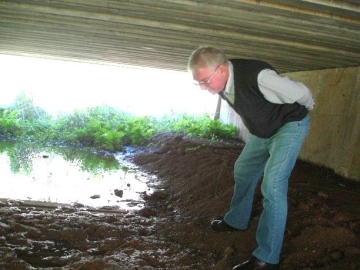 Figure 10. Wildlife crossing beneath a small bridge on RS-486 – Rota do Sol. |
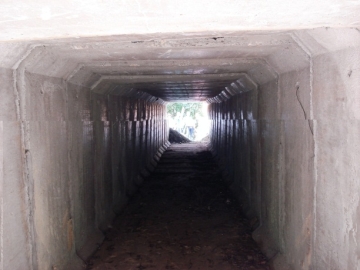 Figure 11. Installation of a wildlife crossing in a box culvert. BR-101/RS. |
|
| Figure 10. Wildlife crossing beneath a small bridge on RS-486 – Rota do Sol. | Figure 11. Installation of a wildlife crossing in a box culvert. BR-101/RS. | |
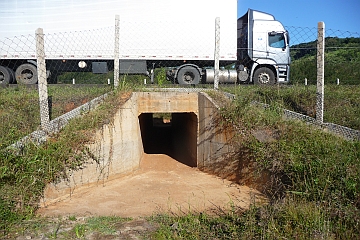 Figure 12. Wildlife crossing in a 1.5 × 1.5 m box culvert, BR-101/RS. |
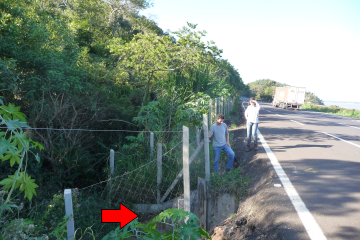 Figure 13. Entrance to a wildlife crossing (arrow) on BR-101/RS, with directional fencing. |
|
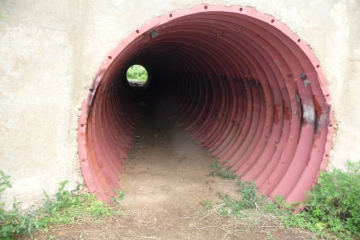 Figure 14. Wildlife crossing built with a corrugated pipe culvert on BR-471/RS – Taim Ecological Station. |
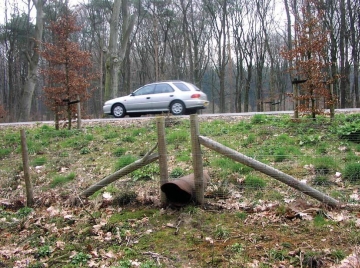 Figure 15. Tunnel for small mammals with a guiding fence (CLEVENGER & HUIJSER 2011). |
|
| Figure 14. Wildlife crossing built with a corrugated pipe culvert on BR-471/RS – Taim Ecological Station. | Figure 15. Tunnel for small mammals with a guiding fence (CLEVENGER & HUIJSER 2011). |
Large wildlife underpasses are generally 7–25 m wide and 3–5 m high. An openness ratio greater than 0.75 is often recommended, because very low structures may be perceived as tunnels and may be less readily used by some species, including deer (CALTRANS 2009). Openness, however, should not be treated as a single universal criterion. Factors such as illuminated openings at the median, habitat quality and target species should also guide structural design (CLEVENGER & HUIJSER 2011). Habitat should correspond on both sides of the road (CLEVENGER & HUIJSER 2011). Minor adaptations to the substrate and wall covering can broaden the range of species using the structure. Precast bridge-type structures can provide greater vertical clearance. Fencing, or mechanically stabilized earth where topographically appropriate, is recommended to guide animals toward the crossing and prevent access to the roadway. These crossings are particularly suited to large mammals, but may be used by most other animal groups (BECKMANN et al. 2010). Local soil should be provided as substrate and microhabitat complexity should be enhanced with rocks, stones, branches and woody debris (CLEVENGER & HUIJSER 2011). Their high construction cost can be a limiting factor (ARROYAVE et al. 2006).
Large wildlife underpasses
These structures are similar to large wildlife underpasses but are also intended for human use and domestic animals. Although designed to accommodate some large mammals, they can also be used by other groups, particularly generalist species. One common Brazilian form is the livestock underpass. Motor-vehicle use should be avoided. Where the structure is sufficiently wide, human movement can be confined to one side and vegetation used to separate human and wildlife use. They should be at least 5 m wide, preferably more than 7 m, and more than 2.5 m high; heights above 3.5 m are recommended (BECKMANN et al. 2010; CLEVENGER & HUIJSER 2011).
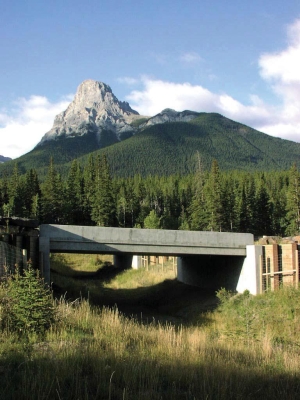 Figure 16. Underpass built using a small-bridge structure with natural lighting (Clevenger & Huijser 2011). |
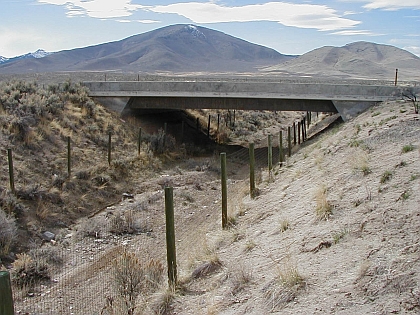 Figure 17. Wildlife underpass in Sierra County, California. Photo: Brian Ehler, Calif. DF&G (Caltrans 2009). |
|
Multi-use underpasses
Structures similar to large wildlife underpasses, but also intended for use by people and domestic animals. Although designed for certain large mammals, they may also be used by other wildlife groups, particularly generalist species. One common form in Brazil is the livestock underpass (passa-gado). Motorized vehicle use should be avoided. Where the passage is sufficiently wide, pedestrian use can be confined to one side, with vegetation separating the different uses. These passages should be at least 5 m wide, preferably more than 7 m, and over 2.5 m high (preferably more than 3.5 m) (BECKMANN et al. 2010; CLEVENGER & HUIJSER 2011).
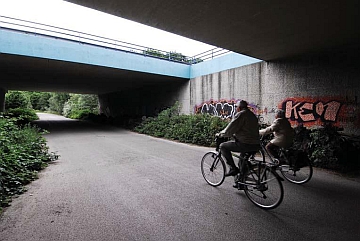 Figure 18. Multi-use underpass (CLEVENGER & HUIJSER 2011). |
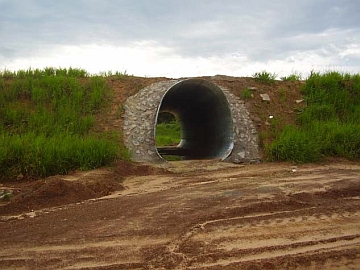 Figure 19. Livestock underpass made of a corrugated pipe. Photo: VALEC Environmental Standard No. 15/2010 (www.valec.gov.br). |
|
| Figure 18. Multi-use underpass (CLEVENGER & HUIJSER 2011). | Figure 19. Livestock underpass made of a corrugated pipe. Photo: VALEC Environmental Standard No. 15/2010 (www.valec.gov.br). |
Tunnels for amphibians and reptiles
Location along migration routes to breeding sites and the microclimate within the structure (humidity, light and temperature) are decisive for use by amphibians and reptiles (CLEVENGER & HUIJSER 2011). Longer and narrower tunnels should be positioned close to the road surface and should include openings that allow light to enter. The substrate should preferably be covered with soil, which retains more moisture than bare concrete or metal structures (LESBARRÈRES et al. 2004).
Rectangular tunnels are generally recommended because the vertical walls of precast structures help guide animal movement. Circular culverts are also used, but steel structures should be avoided because of their high conductivity, the possibility of generating magnetic fields (LESBARRÈRES et al. 2004), and the very low temperatures they may reach during spring migration periods. Subsurface channels covered by metal grates may also be used. Tunnels must not become flooded, as flooding prevents animal passage. They should not contain steps or steep vertical gradients and, where they cross median strips, should preferably remain continuous rather than having open upper sections (CLEVENGER & HUIJSER 2011).
These structures are commonly up to 0.9 m wide, and successful use has been documented over distances of up to 40 m in Lausanne, Switzerland, although shorter tunnels appear to be more effective for amphibians (BECKMANN et al. 2010). Several tunnels should be installed in breeding areas, preferably spaced no more than 45 m apart (CLEVENGER & HUIJSER 2011).
Fences and barriers are essential for directing animals toward these structures. They should meet the tunnel at approximately a 45° angle and should be designed to hinder climbing, preferably exceeding 35 cm in height.
A complete system designed primarily for amphibians, combining roadkill prevention and restoration of connectivity, has been implemented and tested along the Rota do Sol highway in Rio Grande do Sul, where the road crosses the Mata Paludosa Biological Reserve. Four threatened amphibian species occur in this strictly protected area. Further details on the system are available here.
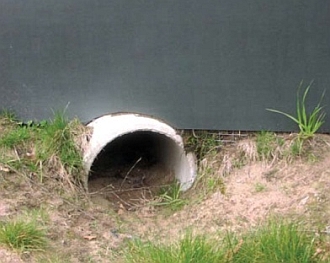 Figure 20. Tunnel for herpetofauna with a directional barrier (CLEVENGER & HUIJSER 2011). |
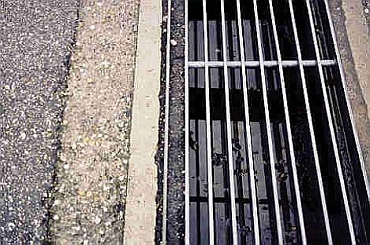 Figure 21. Subsurface amphibian passage covered by grates (CLEVENGER
& HUIJSER 2011). |
|
| Figure 20. Tunnel for herpetofauna with a directional barrier (CLEVENGER & HUIJSER 2011). | Figure 21. Subsurface amphibian passage covered by grates (CLEVENGER & HUIJSER 2011). |
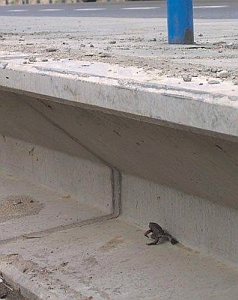 Figure 22. Directional fence for herpetofauna (BARKER
2009). |
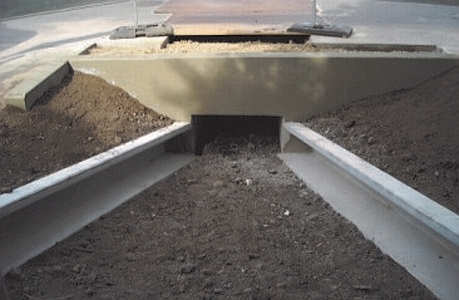 Figure 23. Entrance to a tunnel for herpetofauna (BARKER 2009). |
|
| Figure 22. Directional fence for herpetofauna (BARKER 2009). | Figure 23. Entrance to a tunnel for herpetofauna (BARKER 2009). |
Ecoducts or landscape bridges
First tested in Europe more than four decades ago, ecoducts or landscape bridges have been positively evaluated for their ability to provide movement opportunities for a broad range of animals (ARROYAVE et al. 2006). Important features include vegetated cover and visual screening, for example through shrubs and small trees planted along the sides or through wooden fencing. Artificial channels or habitat features may also be incorporated to encourage use by amphibians (ARROYAVE et al. 2006).
These structures can provide habitat continuity because the crossing itself recreates an environment attractive to wildlife, without confinement, and can reproduce surrounding environmental conditions. For small animals, the structure may function as habitat as well as a passage corridor (AHERN et al. 2009). Different vegetation strata should be included—herbaceous, shrub and tree cover—to encourage use by a wider range of species. Ecoducts are generally more than 70 m wide and preferably exceed 100 m, potentially serving all groups of terrestrial fauna (BECKMANN et al. 2010; CLEVENGER & HUIJSER 2011), as well as birds. Their principal constraint is the high cost of construction.
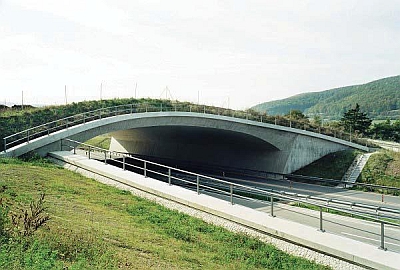 Figure 24. Ecoduct (CLEVENGER
& HUIJSER 2011). |
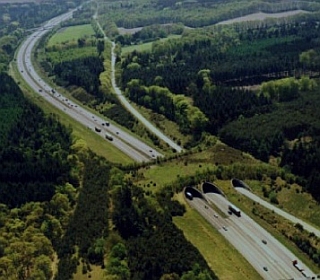 Figure 25. Ecoduct (DAMARAD
& BEKKER 2003). |
|
| Figure 24. Ecoduct (CLEVENGER & HUIJSER 2011). |
|
Figure 25. Ecoduct (DAMARAD & BEKKER 2003). |
Wildlife overpasses
Wildlife overpasses are similar to ecoducts but are smaller, generally 40–70 m wide. For use by large mammals, a minimum width of approximately 40–50 m has been suggested (VAN WIEREN & WORM 2001). According to 2008 data, only four wildlife overpasses existed in the United States and three in Canada, compared with 559 and 118 underpasses, respectively. In Europe, however, overpasses are widely used, with numerous structures documented in France, Germany, Switzerland, the Netherlands and other countries, as well as in Australia.
Human activity on these crossings should be minimized to increase effectiveness. Although they are primarily intended for large mammals, they are used by a broad range of species (BECKMANN et al. 2010). For larger species, shrub density should not impede movement. Because small and medium-sized mammals, amphibians, reptiles, birds and invertebrates may also use these structures, the crossing should provide continuity with surrounding habitat and include similar vegetation.
The type and density of vegetation that can be established are limited by the depth of soil that the structure can support. Because this depends directly on structural engineering, soil and vegetation requirements must be considered during the design phase. Overpasses can also create traffic-safety concerns if they interfere with ramps or intersections, distract drivers, or obstruct sight lines; consequently, their design and location must be carefully assessed as part of the road engineering project.
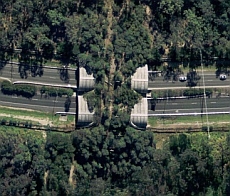 Figure 26. Aerial view of the wildlife overpass on Compton Road, Brisbane, Australia. Image: Google Earth, 15 June 2009. |
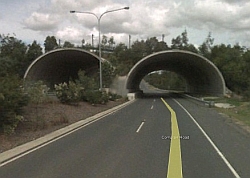 Figure 27. View of the wildlife overpass from the road. Image: Google Street View. (27°36′58″S, 153°05′03″E) |
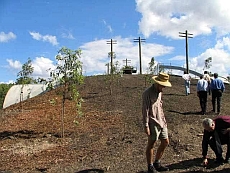 Figure 28. Establishment of vegetation on the wildlife overpass. Poles with bird perches can be seen in the background (VEAGE & JONES 2007). |
||
| Figure 26. Aerial view of the wildlife overpass on Compton Road, Brisbane, Australia. Image: Google Earth, 15 June 2009. | Figure 27. View of the wildlife overpass from the road. Image: Google Street View. (27°36′58″S, 153°05′03″E) | Figure 28. Establishment of vegetation on the wildlife overpass. Poles with bird perches can be seen in the background (VEAGE & JONES 2007). |
Multi-use overpasses
Multi-use overpasses are intended for both wildlife—particularly mammals, including some large species and most habitat generalists—and people or domestic animals (BECKMANN et al. 2010). Design adaptations should provide at least partial separation among user types. For example, shrub vegetation may be planted in the portion intended primarily for wildlife (AHERN et al. 2009). These structures are generally 8–25 m wide.
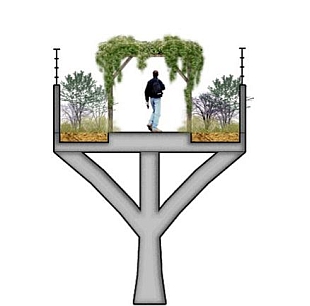 Figure 29. Conceptual design of a multi-use crossing for people and wildlife at Walden Ponds, Massachusetts, USA (AHERN et al. 2009). |
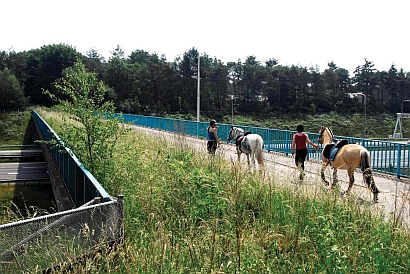 Figure 30. Multi-use overpass (CLEVENGER
& HUIJSER 2011). |
|
| Figure 29. Conceptual design of a multi-use crossing for people and wildlife at Walden Ponds, Massachusetts, USA (AHERN et al. 2009). | Figure 30. Multi-use overpass (CLEVENGER & HUIJSER 2011). |
Canopy crossings
Canopy crossings generally consist of steel cables or ropes connecting tree canopies and are intended for semi-arboreal and arboreal species in forested environments (BECKMANN et al. 2010). Although they may be anchored directly to trees on narrow roads, they should preferably be attached to permanent structures specifically built for this purpose. Ropes should be at least 8 cm in diameter and may be installed in parallel, approximately 20–30 cm apart, with nylon mesh connecting them. When wooden platforms are used, they should be at least 30 cm wide (CLEVENGER & HUIJSER 2011).
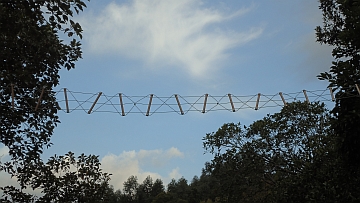 Figure 31. Canopy crossing installed along SC-450 highway, Praia Grande. Photo: Rodney Schmidt – IBAMA, environmental licensing process No. 02001.002695/05-01. |
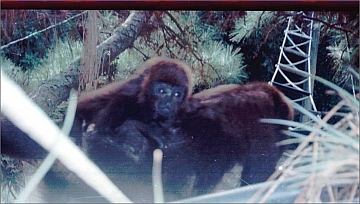 Figure 32. Brown howler monkeys (Alouatta
guariba) using the canopy crossing. Photo: Gerson Buss, Programa Macacos Urbanos. |
|
| Figure 31. Canopy crossing installed along SC-450 highway, Praia Grande. Photo: Rodney Schmidt – IBAMA, environmental licensing process No. 02001.002695/05-01. | Figure 32. Brown howler monkeys (Alouatta guariba) using the canopy crossing. Photo: Gerson Buss, Programa Macacos Urbanos. | |
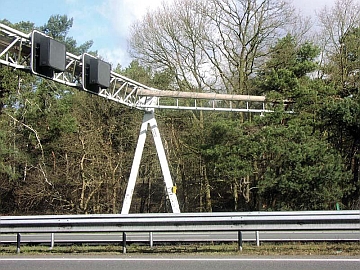 Figure 33. Canopy crossing attached to road-sign structures (CLEVENGER
& HUIJSER 2011). |
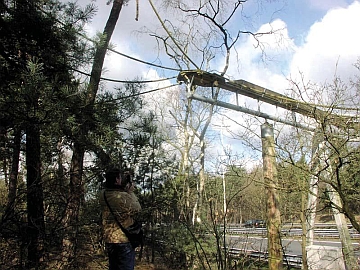 Figure 34. Canopy crossing made of a wooden structure and ropes (CLEVENGER & HUIJSER 2011). |
|
| Figure 33. Canopy crossing attached to road-sign structures (CLEVENGER & HUIJSER 2011). | Figure 34. Canopy crossing made of a wooden structure and ropes (CLEVENGER & HUIJSER 2011). |
Road tunnels
With lengths determined by the obstacle to be crossed, road tunnels are generally built where topographic features make other alternatives difficult, such as in mountainous regions. By physically separating traffic from wildlife, they virtually eliminate wildlife–vehicle collisions and preserve existing connectivity, making them environmentally preferable to technological alternatives that directly interfere with habitat (CARR
et al. 2002). However, because of their high cost, they are rarely used exclusively for wildlife-related purposes (BECKMANN et al. 2010). When justified by broader environmental considerations, however, this alternative has been selected within environmental licensing processes. One example is the tunnel beneath Morro Alto on BR-101/RS, 1,900 m long, which shortened the previous road alignment by 10.95 km. The estimated total cost of the 25-km contract section containing the tunnel nevertheless increased from BRL 59 million to BRL 110 million after this alternative was adopted.
Offering similar results at somewhat lower—although still high—costs, cut-and-cover tunnels using box cuts can be particularly efficient where topography permits and the surrounding environment is of high conservation value. In this case, terminology depends on the observer's perspective, because the structure may equally be regarded as an ecoduct or wildlife overpass whose construction is facilitated by local topography. These structures can serve virtually all animal groups.
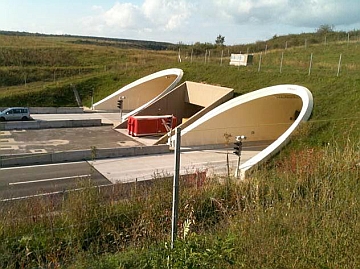 Figure 35. Tunnel complex with a fenced wildlife overpass (JONES 2010). |
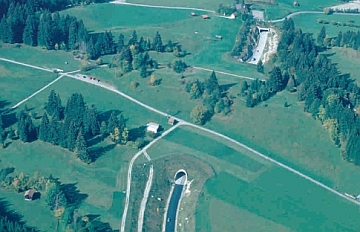 Figure 36. Tunnel in Germany, with the upper area providing mixed use by people and wildlife (IUELL
et al. 2003). |
|
| Figure 35. Tunnel complex with a fenced wildlife overpass (JONES 2010). | Figure 36. Tunnel in Germany, with the upper area providing mixed use by people and wildlife (IUELL et al. 2003). |
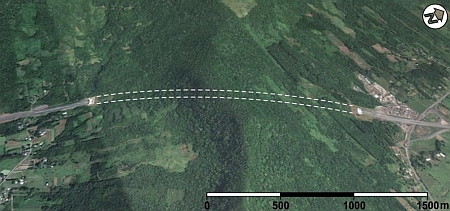 |
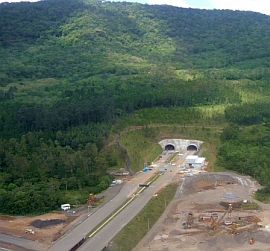 Figure 38. Northern portal of the tunnel beneath Morro Alto, BR-101/RS. |
|
| Figure 37. Tunnel beneath Morro Alto, BR-101/RS. Google Earth image, 2010. (Geographic coordinates: 50°12′27″W / 29°44′00″S, WGS84). | Figure 38. Northern portal of the tunnel beneath Morro Alto, BR-101/RS. |
Viaducts and elevated roadways
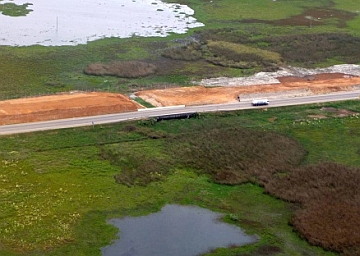
They are generally not built primarily to provide wildlife connectivity, but they offer this important additional benefit. In extensive floodplains and wetlands, viaducts and elevated roadways are often the best alternative because they cause minimal interference with the environment. Their length is variable and they can serve virtually all animal groups (BECKMANN et al. 2010).
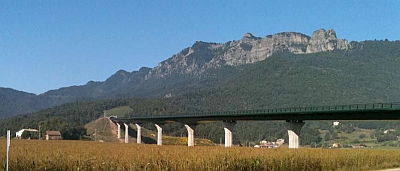 Figure 39. Viaduct (Jones
2010). |
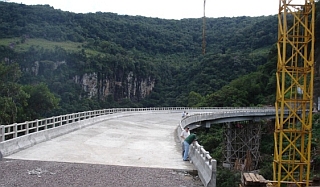 Figure 40. Viaduct on RS-486 (Rota do Sol), Rio Grande do Sul. |
|
| Figure 39. Viaduct (Jones 2010). | Figure 40. Viaduct on RS-486 (Rota do Sol), Rio Grande do Sul. | |
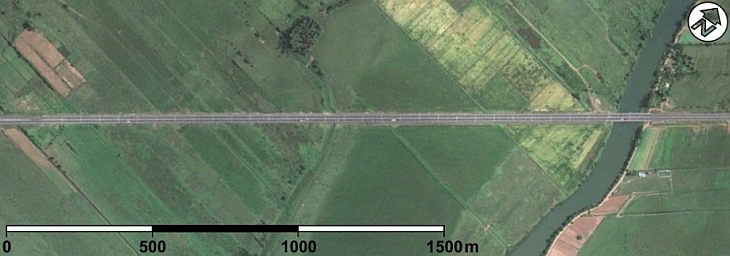 Figure 41. Approximately 2,100-m elevated roadway on BR-101/RS, Maquiné River floodplain. Google Earth image, 2010. (Geographic coordinates: 50º10’53”W / 29º42’23”S, WGS84) |
||
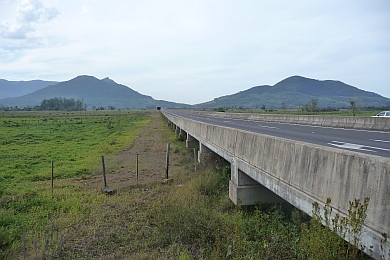 Figure 42. Elevated roadway on the Maquiné River floodplain. (Geographic coordinates: 50º11’40.4”W / 29º43’12.4”S, WGS84) |
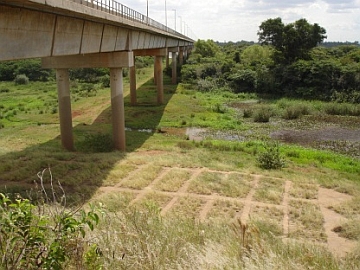
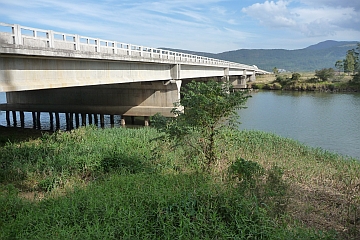
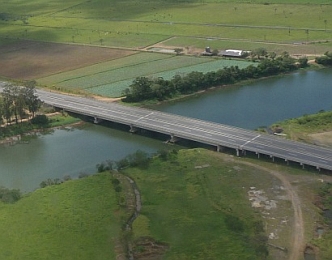 Figure 43. Detail of the elevated roadway over the Maquiné River channel, BR-101/RS. |
|
| Figure 42. Elevated roadway on the Maquiné River floodplain. (Geographic coordinates: 50º11’40.4”W / 29º43’12.4”S, WGS84) | Figure 43. Detail of the elevated roadway over the Maquiné River channel, BR-101/RS. | |
Bridges and small bridges
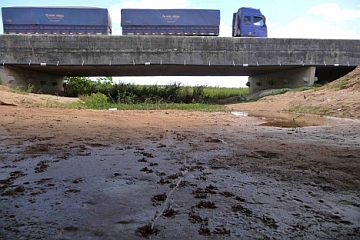
They preserve the integrity of aquatic environments and, with adaptations such as dry ledges or dry passages, can provide excellent corridors for terrestrial wildlife, whose movements are often associated with drainage systems and riparian vegetation.
|
Modified culverts
Originally designed for drainage, culverts can become effective vertebrate crossing structures with relatively minor modifications. Dry ledges and access ramps are inexpensive and easy to install and can make a culvert functional for wildlife. Such adaptations, however, must not interfere with its hydraulic capacity (BECKMANN et al. 2010). An analysis by ASCENSÃO & MIRA (2007)
of the use of 34 culverts on two roads in Portugal showed that these structures become part of the movement routes of many species, particularly carnivores, regardless of traffic volume. Where traffic is heavy, disturbance discourages animals from attempting to cross the road surface and promotes the use of alternative passages, especially when directional fencing is installed. In Australia, culverts have been used by a broad range of species, particularly where adjacent habitats remain well preserved (TAYLOR
& GOLDINGAY 2003), a pattern similar to that observed for felids in the United States (CAIN et al. 2003) and mammals in general in Canada (CLEVENGER et al. 2001A).
Shape, length, height, width, lining and lighting, as well as steps or debris-collection pits that may act as physical obstacles, are structural characteristics that influence use by all animal groups and particularly by fish. Whereas most animals prefer structures that provide good visibility of habitat at the opposite end, this does not appear to be a determining feature for amphibians (CALTRANS 2009). The substrate should preferably resemble that of the adjacent environment, and the use of guiding fences and vegetation near culvert entrances increases their potential use (GRILO et al. 2008;
TAYLOR & GOLDINGAY 2003).
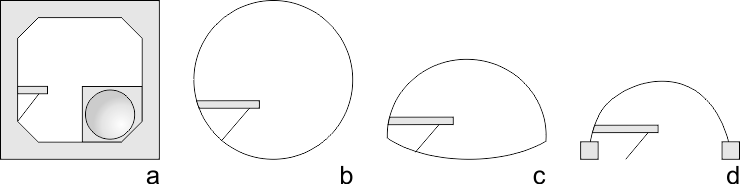
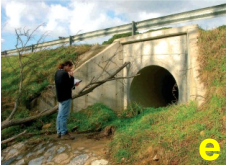
Culverts are generally 0.6 to 2.5 m wide or in diameter and may include the following types (Figure 48):
-
Box culvert: generally made of precast concrete, with a large basal area; it can be installed in modules and is relatively simple to construct. The base is normally smooth, which may increase water velocity. Under low-flow conditions, a recessed central channel is important to maintain continuous flow and provide passage for fish.
-
Circular culvert: greater water depth facilitates fish movement during low-discharge conditions.
- Pipe-arch culvert: enlarged basal area and low profile.
-
Arch culvert: retains the streambed substrate under conditions close to natural, which is especially desirable for fish. These culverts can be built with cross sections of up to 12 m, although normal installation feasibility generally does not exceed 7.5 m. They are also limited on gradients above 8% because erosion may compromise foundation stability (BAKER & VOTAPKA 1990). Longer installation time, greater height requirements and higher cost also limit their routine adoption as drainage structures.
 |
||
 |
 |
 |
 |
 |
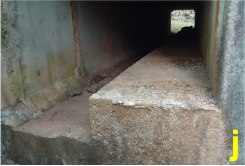 |
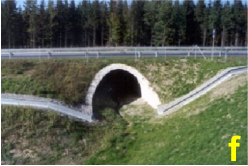
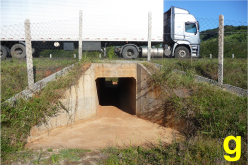
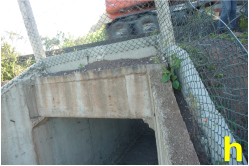
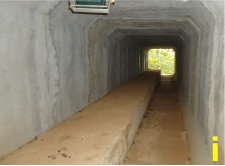
| Figure 48. Cross-sections of different culvert types and examples of dry-passage platforms. a,g,h,i,j) box culverts; b,e) circular culverts; c) pipe-arch culvert; d,f) arch culverts. The box culvert in (a) contains, on the right, a platform above a circular culvert serving as a dry passage, a solution adopted by DNIT in some federal highway projects. In (g), a directional fence, detailed in (h). In (i) and (j), details of dry passages inside box culverts. Note the absence of exit ramps to facilitate wildlife access in the culvert shown in (j). Diagram adapted from Baker & Votapka (1990); photographs: (e) Iuell et al. 2003, (f) Bank et al. 2002. | ||
Preferably, culvert skew and vertical slope should match those of the watercourse being drained. If the slope is too steep, however, the smooth culvert surface may increase water velocity enough to prevent passage by several fish species. Following detailed hydrological assessment, the culvert slope may be reduced to facilitate fish passage, while measures are adopted to overcome the resulting elevation difference between one or both culvert ends and the watercourse. Culvert outlets should not create drops that prevent wildlife passage. Transitions can be softened with coarse rock, or sequential resting pools can be created using gabion or concrete barriers with elevation differences of up to 30 cm until the difference between the culvert end and the normal water level is overcome (Figure 49). Corrugated metal culverts produce water velocities two to three times lower than smooth culverts under the same length, slope and flow conditions, which is desirable for fish movement (BAKER & VOTAPKA 1990). For terrestrial wildlife, however, lining of the lower surface may be required where excessive roughness hampers movement by small species. Culverts made of dark materials may also benefit from a lighter internal coating to improve visibility.
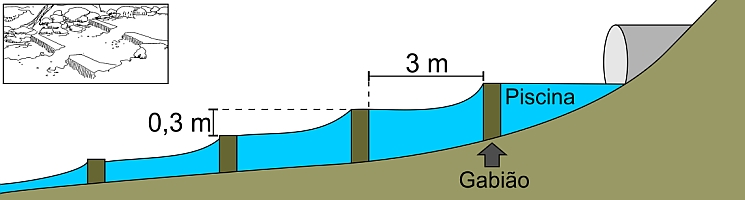 Figure 49. Longitudinal section of a pool system designed to dissipate water-flow energy and enable fish passage. The detail at left shows central channels for maintaining flow. Adapted from Baker & Votapka (1990). |
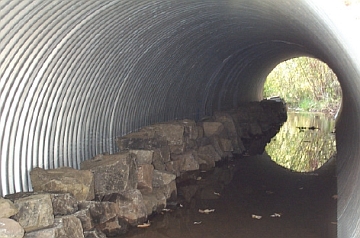
For wildlife in general, a dry-passage device is essential under most high-flow conditions. This may consist of a bracket-supported platform, a solid ledge, or a platform above a circular culvert placed within a larger culvert so that the design discharge is maintained. Gentle ramps should connect adjacent ground to the platform. Even if exceptional flows temporarily inundate the entire structure, it will remain functional as a wildlife passage most of the time.
|
Figure 50. Dry passage formed by stones along the side of a corrugated culvert (CALTRANS 2009). |
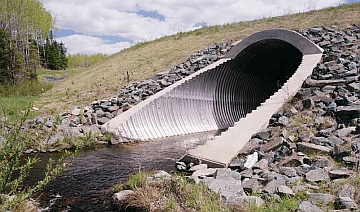 Figure 51. Corrugated metal culvert with a concrete rim at the entrance and surrounding stonework for improved visibility. Photo: Atlantic Industries Limited. |
|
|
Figure 52. Sketch illustrating a dry platform for wildlife movement. Adapted from Technical Note GA-14-05-2012, DNIT-UFSC/FAPEU (Laura M. Gomes, Luis Fernando Barrios and Juliana S. Roscoe), BR-386/RS licensing process, IBAMA Process No. 02001.007807/2006-92. |
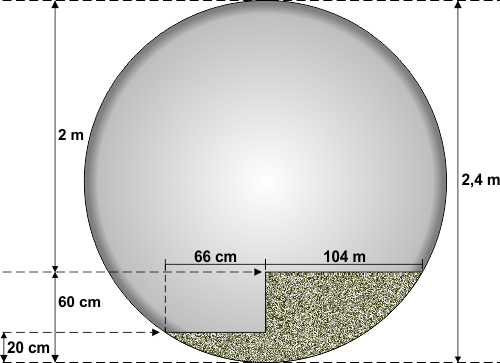
Noise barriers
Noise barriers may be made of wood, concrete or glass, or created using suitable vegetation. Vegetated barriers may include dense shrubs and small trees at road level, or trees with dense foliage at the top of cut slopes, provided road safety is not compromised. In addition to acoustic protection for adjacent developed areas, their wildlife-related functions include protecting bird nesting sites and guiding animals toward crossing structures. Their effectiveness has been little tested, and their influence on the barrier effect should be evaluated, both because of their physical obstruction and because reduced noise could potentially decrease wildlife avoidance of the road (BANK et al. 2002).
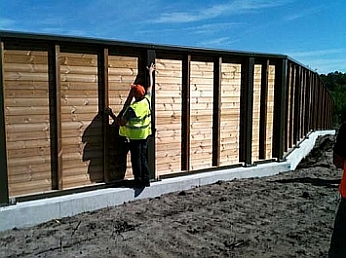 Figure 53. Noise barrier in France (JONES 2010). |
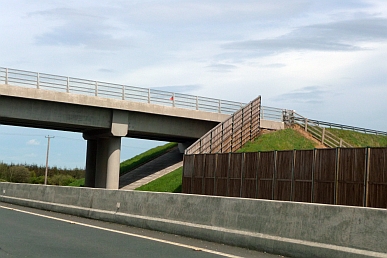 Figure 54. Noise barrier, M7 motorway, Ireland, 2012. Photo: Fabiana Michelsen de Andrade, FEEVALE. |
|
| Figure 53. Noise barrier in France (JONES 2010). | Figure 54. Noise barrier, M7 motorway, Ireland, 2012. Photo: Fabiana Michelsen de Andrade, FEEVALE. |
Widening of the median strip
A wider, vegetated median could provide animals with an intermediate refuge while crossing a road, allowing them to cross one traffic direction at a time and theoretically reducing collision risk. Existing quantitative data, however, indicate that this type of median treatment may result in more collisions than divisions using Jersey barriers (Figure 56) or undivided pavement, especially for birds and felids ( Jersey (Figure 56) or continuous pavement, especially for birds and felids (CAIN et al. 2003; CLEVENGER & KOCIOLEK 2006). This may result from attracting more animals into a potentially hazardous environment (BECKMANN et al. 2010), especially where fruit-bearing trees are used. Jersey or F-shaped barriers, designed to redirect out-of-control vehicles back toward the roadway, are widely used around the world along road edges and between opposing traffic flows. Because they form physical barriers to wildlife movement, gaps for animals or oval openings that allow small mammals and rodents to cross without being blocked are increasingly used, although the effectiveness of these structural adaptations has not yet been tested ( Jersey ou F, which are designed to redirect out-of-control vehicles back toward the roadway, are widely used worldwide both along road edges and to separate opposing traffic flows. Because they form physical barriers to wildlife movement, gaps for animals or oval openings that allow small mammals and rodents to cross without being blocked are increasingly used, although the effectiveness of these structural adaptations has not yet been tested (CLEVENGER & KOCIOLEK 2006).
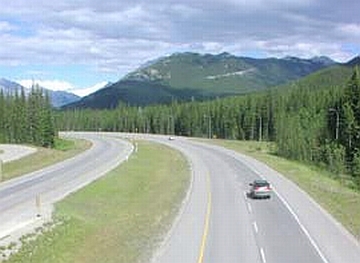 Figure 55. Widened median strip (Clevenger
& Kociolek 2006). |
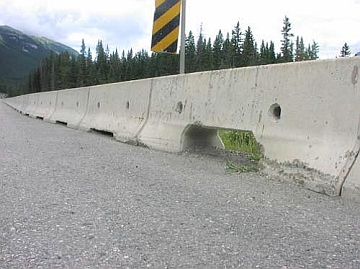 Figure 56. Jersey barrier with a wildlife opening (Clevenger & Kociolek 2006). |
|
| Figure 55. Widened median strip (Clevenger & Kociolek 2006). | Figure 56. Jersey barrier with a wildlife opening (Clevenger & Kociolek 2006). |
Translation note: This English version was preliminarily translated using ChatGPT and has not yet undergone human review.