2.1. MEDIDAS MITIGADORAS:
OPÇÕES EXISTENTES > MANEJO (USUÁRIOS/BIOLÓGICO)
Unlike structural interventions, these measures do not substantially change road construction standards. Instead, they seek to influence driver behavior—through traffic restrictions, warnings in high-risk areas, or greater awareness of wildlife—or to change how animals interact with the road, deterring them or safely controlling their presence.
Educational campaigns
Educational campaigns provide drivers with information on the number of wildlife–vehicle collisions, the most hazardous road sections and times of day, and the procedures to follow when an animal is seen on or near the roadway. Their effectiveness in reducing road mortality has not been quantified, although they can help publicize the problem and the mitigation strategies adopted. In Brazil, informational leaflets have been distributed at police stations and toll plazas on highways licensed by IBAMA, such as BR-386/RS (Tabaí–Estrela), which has been undergoing duplication works since 2010 (Figure 57).
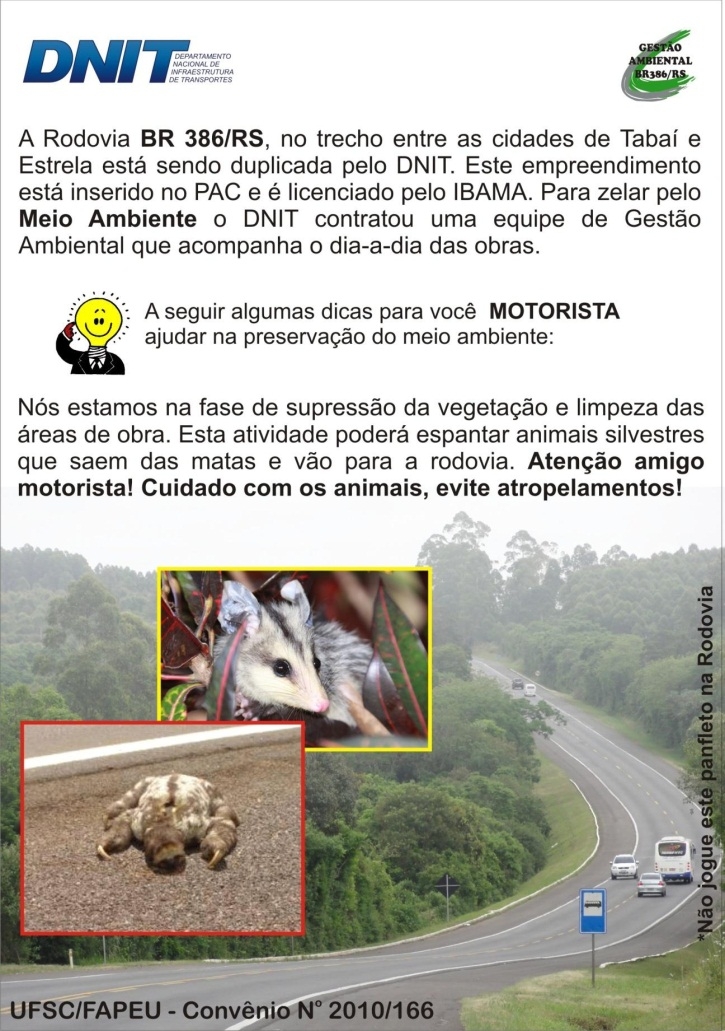 Figure 57. Information leaflet distributed during the widening of BR-386/RS. |
Road signage
Driver habituation to warning signs appears to be the main reason for the limited effectiveness of this measure. Strategies combining wildlife-warning signs with speed-limit signs or flashing lights at selected times reduced vehicle speeds by 3.7–7.4 km/h compared with conventional static signs, but did not produce a significant reduction in wildlife road mortality (BECKMANN et al. 2010). Such devices are usually activated only at night. Mobile illuminated signs, transported on trailers and temporarily installed at different road sections, have shown greater effects on speed reduction than static devices (HARDY et al. 2006). Pavement-marking techniques used in other road-safety contexts may also be employed to reduce speed, including transverse markings, deflections and rumble strips, as well as visual narrowing using delineators or vertical elements such as trees or gateways (BHTRANS 1999).
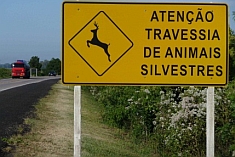 Figure 58. Conventional static road sign. BR-116/RS. |
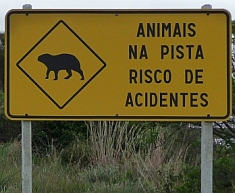 Figure 59. Conventional static road sign adapted to local wildlife. BR-471/RS. |
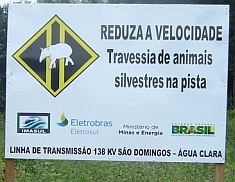 Figure 60. Static road sign on the access road to the São Domingos–Água Clara transmission line, Mato Grosso do Sul, Brazil. Photo: Marli Araújo, Eletrosul. |
||
| Figure 58. Conventional static road sign. BR-116/RS. | Figure 59. Conventional static road sign adapted to local wildlife. BR-471/RS. | Figure 60. Static road sign on the access road to the São Domingos–Água Clara transmission line, Mato Grosso do Sul, Brazil. Photo: Marli Araújo, Eletrosul. |
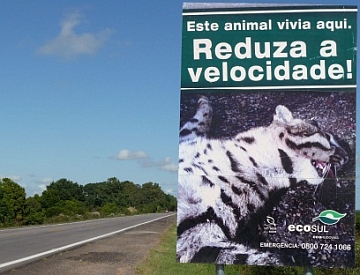 Figure 61. Large static road sign depicting local wildlife. BR-116/392/RS. |
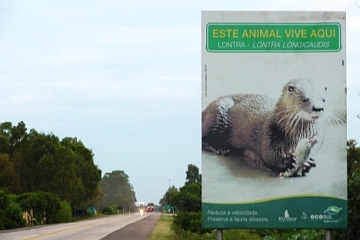 Figure 62. Static road sign (Lontra longicaudis). BR-116/392/RS. |
|
| Figure 61. Large static road sign depicting local wildlife. BR-116/392/RS. | Figure 62. Static road sign (Lontra longicaudis). BR-116/392/RS. |
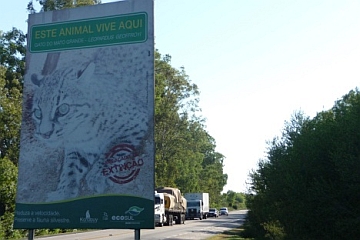 Figure 63. Static road sign (Leopardus geoffroyi). BR-116/392/RS. |
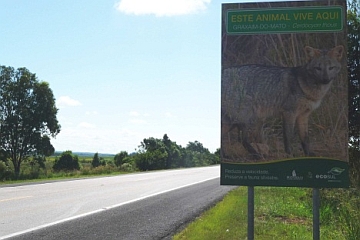 Figure 64. Static road sign (Cerdocyon thous). BR-116/392/RS. |
|
| Figure 63. Static road sign (Leopardus geoffroyi). BR-116/392/RS. | Figure 64. Static road sign (Cerdocyon thous). BR-116/392/RS. |
Speed reduction
There is a direct relationship between traffic speed and wildlife–vehicle collisions because lower speeds substantially increase the response time available to avoid a collision. However, speed limits that are incompatible with road geometry generally do not cause most drivers to reduce speed and may create speed differentials that are themselves hazardous (BECKMANN et al. 2010). Speed limits below the design capacity of the road should therefore be accompanied by physical or enforcement measures, such as speed-control devices, narrower traffic lanes and shoulders, speed humps or rumble strips, or visual narrowing created by roadside elements (BHTRANS 1999). Temporally adjusted speed limits, with lower limits during periods of greater collision risk such as nighttime, are an alternative that deserves further evaluation, especially along short road sections where enforcement is feasible.
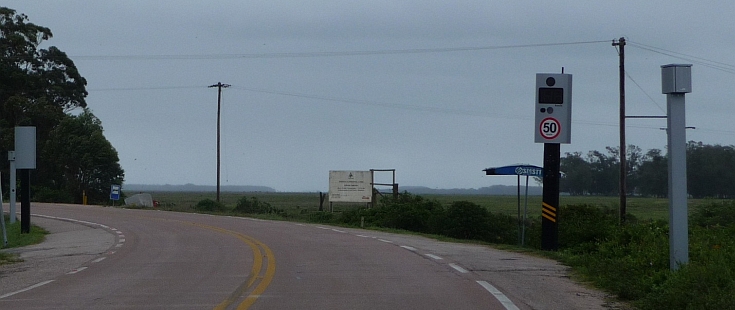 |
| Figure 65. Electronic speed-control device. BR-471/RS. |
Traffic-volume reduction
Although field data and simulations relating traffic volume to wildlife road mortality indicate an inverse relationship between them, redirecting traffic from secondary roads to major highways may increase impacts on habitat quality adjacent to the latter and strengthen their barrier effect (BECKMANN et al. 2010). Use of this strategy therefore requires planning that quantitatively balances the expected reduction in mortality against habitat degradation and increased barrier effects on roads receiving additional traffic, as well as the opposite effects on roads where traffic is reduced.
Temporary road closure
Large seasonal wildlife movements, particularly during amphibian and reptile breeding periods, may justify temporary road closures to prevent mass mortality. In North America, similar situations also involve medium and large mammals such as deer, whose seasonal and nocturnal movements may warrant closures where populations are abundant and collision rates are high (BECKMANN et al. 2010). Because movement of people and goods must be maintained, this measure is generally restricted to low-traffic secondary roads with alternative routes, or roads within protected areas where complete closure may sometimes be feasible. In road networks with few alternatives, as is common in Brazil, implementation is difficult. Nevertheless, partial or temporary restrictions can be appropriate under specific circumstances.
Wildlife detection systems
Sensors that detect wildlife and activate warning signs have the advantage of being deployable along road sections while remaining unobtrusive until an animal is detected. This allows greater freedom of wildlife movement and can accommodate temporal changes in movement patterns. Effective systems must keep false positives—activation by wind, vehicle vibration or other non-wildlife causes—to a minimum. Their effectiveness derives both from reduced vehicle speed and from increased driver alertness when the warning is active. Reported results include a 91% reduction in collisions with large ungulates and speed reductions exceeding 5 km/h (BECKMANN et al. 2010); on a 5-km road section in Arizona, moose collisions were reported to decline by 96%, at a cost substantially lower than that of a large underpass (EILERTS 2009). Wildlife detection systems are used in North America and Europe and have shown promising effectiveness indicators (BANK et al. 2002; HUIJSER et al. 2009).
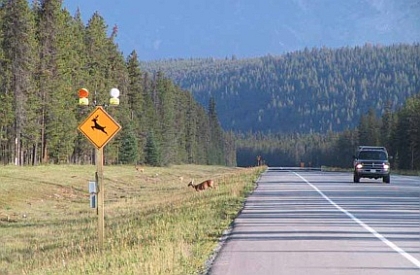 Figure 66. Flashing sign activated by infrared cameras in Canada. Detection combines animal movement, size and speed to trigger the system (HUIJSER et al. 2006). |
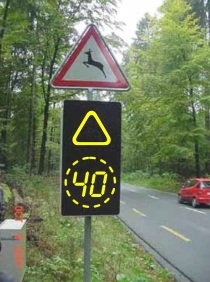 Figure 67. LED warning sign activated by passive infrared sensors calibrated to detect deer movement. Photo adapted from HUIJSER et al. 2006. |
|
| Figure 66. Flashing sign activated by infrared cameras in Canada. Detection combines animal movement, size and speed to trigger the system (HUIJSER et al. 2006). | Figure 67. LED warning sign activated by passive infrared sensors calibrated to detect deer movement. Photo adapted from HUIJSER et al. 2006. |
Warning and deterrence
Warning and deterrence techniques are intended to keep animals away from roads by using human presence, sounds, lights, lasers, chemical repellents or pyrotechnics. Their main limitation is habituation, and available evaluations indicate variable or uncertain effectiveness (BECKMANN et al. 2010).
Acoustic warning devices mounted on vehicles generally emit high-frequency sounds intended to be audible to wildlife. Although the concept is biologically plausible for some taxa, practical limitations include insufficient sound intensity under moving-vehicle conditions, differences among species in hearing ability, concerns about prolonged human exposure and, especially, habituation. Their effectiveness in reducing wildlife-vehicle collisions has therefore not been demonstrated consistently (D'ANGELO et al. 2007; VALITZSKI 2007).
Olfactory repellents attempt to attract or repel wildlife through specific odors so that animals follow preferred routes or remain away from the roadway. Although potentially useful, evidence is still insufficient to quantify effectiveness, and repeated application results in high maintenance requirements and costs (BANK et al. 2002; BECKMANN et al. 2010).
Roadside reflectors and mirrors redirect vehicle headlights toward adjacent habitat with the intention of discouraging animals from approaching the road. European trials have generally found them ineffective or produced controversial and inconclusive results. Problems include low reflectivity, maintenance requirements and habituation. Because reflector color determines the wavelengths produced, responses also differ among animal groups (RAMP & CROFT 2006). The technology nevertheless remains in use in several countries and warrants further evaluation.
Artificial lighting may increase a driver's ability to detect wildlife at night. A road-lighting experiment in Alaska was associated with reductions of up to 65% in vehicle-moose collisions, although it was not possible to distinguish improved driver visibility from wildlife avoidance of illuminated areas (BECKMANN et al. 2010). European experiences have not consistently reduced road mortality and have documented ecological effects on birds, including disturbance of nesting behavior and disorientation of migratory species (BANK et al. 2002; JACOBSON 2005).
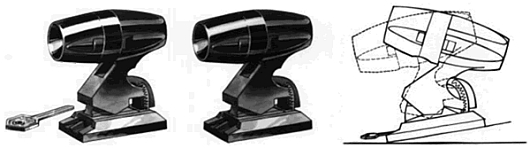 Figure 68. Wind-powered ultrasonic emitter. Image: https://www.sav-a-life.com. |
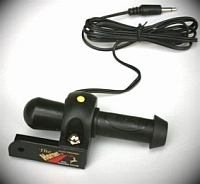 Figure 69. Electrically powered ultrasonic emitter. Photo: https://www.xp3hornet.com. |
|
| Figure 68. Wind-powered ultrasonic emitter. Image: https://www.sav-a-life.com. | Figure 69. Electrically powered ultrasonic emitter. Photo: https://www.xp3hornet.com. |
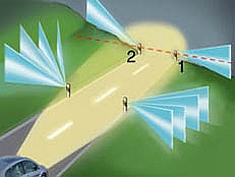 Figure 70. Diagram of roadside reflector installation. Image: www.swareflex.com. |
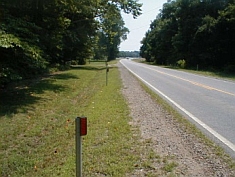 Figure 71. Reflectors installed along a highway in the United States. Image: www.strieter-lite.com. |
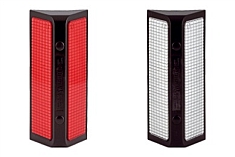 Figure 72. Reflector model. Image: www.swareflex.com. |
||
| Figure 70. Diagram of roadside reflector installation. Image: www.swareflex.com. | Figure 71. Reflectors installed along a highway in the United States. Image: www.strieter-lite.com. | Figure 72. Reflector model. Image: www.swareflex.com. |
Flight diverters
Flight diverters installed on bridges or road sections crossing wetlands are intended to encourage birds to gain altitude before crossing the roadway, thereby reducing collision risk. Their use is particularly relevant where regular flight paths intersect traffic corridors (JACOBSON 2005).
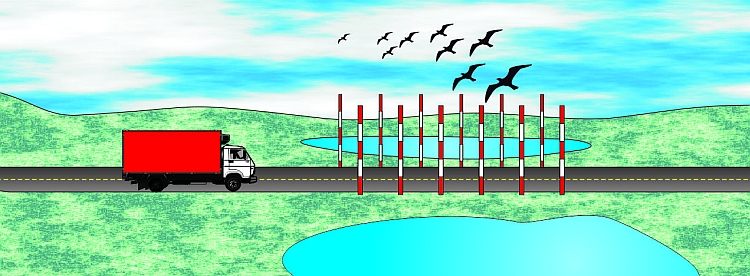 |
| Figure 73. Schematic representation. |
Supplemental feeding
Supplemental feeding consists of providing food at locations away from the road in order to attract animals away from traffic. Although reductions in wildlife-vehicle collisions have been reported in experiments in the United States, Canada and Norway, long-term use may create food dependence, contribute to population growth and require substantial labor and continuing expenditure (BECKMANN et al. 2010).
Carcass removal
Carcasses of road-killed animals can attract scavengers and predators to the roadway and thereby create additional collision risk. Prompt removal can reduce this secondary attraction. Disposal sites should be located far enough from the road that scavengers are not encouraged to remain within the road-effect zone, and maintenance teams should record carcass locations whenever possible so that mortality data are not lost.
Simply moving carcasses from the pavement to the immediately adjacent right-of-way is not recommended, because it may continue to attract animals close to traffic. Carcass-removal protocols should therefore be integrated with roadkill monitoring and routine road maintenance.
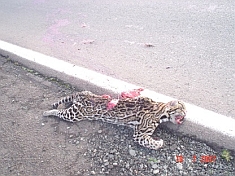 Figure 74. Ocelot, SC-438. Photo: Marli Araújo, Eletrosul. |
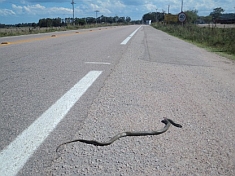 Figure 75. Yellow rat snake, BR-471/RS. Photo: Marli Araújo, Eletrosul. |
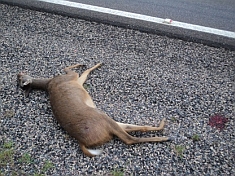 Figure 76. Deer, BR-153/RS. Photo: Marli Araújo, Eletrosul. |
||
| Figure 74. Ocelot, SC-438. Photo: Marli Araújo, Eletrosul. | Figure 75. Yellow rat snake, BR-471/RS. Photo: Marli Araújo, Eletrosul. | Figure 76. Deer, BR-153/RS. Photo: Marli Araújo, Eletrosul. |
Habitat modification
Habitat modification seeks to make the road verge less attractive to wildlife or to guide animal movements toward safer crossing locations. Management may include vegetation control, removal of food resources, alteration of cover and treatment of drainage or other roadside features.
When combined with fencing and wildlife-crossing structures, habitat management can reinforce directional effects and improve the probability that animals use designated crossings. However, interventions must consider the ecological role of roadside vegetation and avoid creating additional habitat degradation, erosion or invasive-species problems.
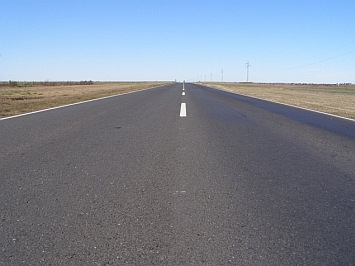 Figure 77. Road right-of-way with low-growing vegetation. Ruta 7, Argentina. |
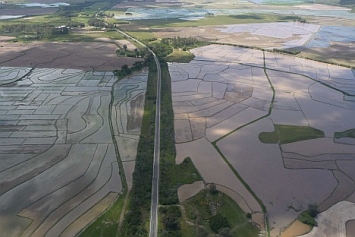 Figure 78. Vegetation corridor connecting habitats in a rice-growing area. BR-116/RS. |
|
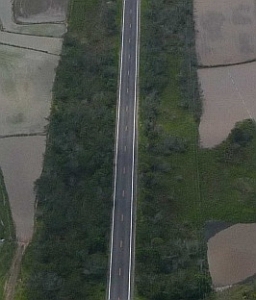 Figure 79. Detail of the previous photograph (BR-116/RS). |
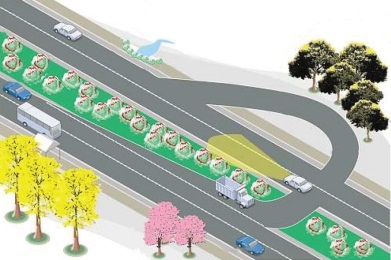 Figure 80. Use of vegetation in road guidance/signage: BR-101/RS (BUBLITZ 2011). |
|
Fences and barriers
Fencing is one of the most widely used tools for preventing wildlife from entering the roadway. Evidence generally indicates that fences can substantially reduce wildlife-vehicle collisions, especially when they are properly designed, maintained and associated with crossing structures. Their function is not simply to exclude animals, but also to guide them toward safe crossing points.
Fence integrity must be maintained throughout the treated section. Openings, damaged segments, vegetation leaning over the fence and poorly designed access points can allow animals to enter the fenced road corridor and may create situations in which they become trapped between opposing fences. Fence length should therefore be sufficient to encompass the relevant habitat and movement zone.
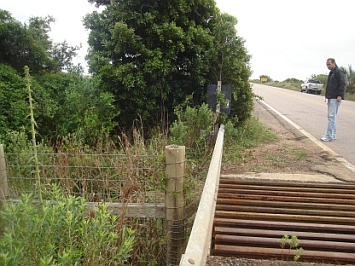
Fences should normally be installed on both sides of the road in a coordinated and approximately symmetrical arrangement. Fence ends require particular attention because they can concentrate crossing attempts. Where feasible, termini should coincide with wildlife crossings or with locations where topography, human activity or habitat transitions reduce the likelihood of wildlife movement. Cattle guards and similar devices can prevent entry at road accesses, but they should include escape opportunities for small animals that fall into them.
Escape ramps, one-way gates and similar devices can allow animals that accidentally enter a fenced road section to return to adjacent habitat. For large mammals, fences around 2.4 m high are commonly recommended, although dimensions should be adapted to the target fauna. Lower sections should use smaller mesh, and the fence base should generally be buried at least 20 cm to prevent animals from passing underneath.
Galvanized-wire mesh is commonly used, with mesh size selected according to the target taxa. In landscapes where stone walls are traditional, properly designed stone barriers may provide an alternative with good landscape integration and potentially lower maintenance requirements; for larger species they can be combined with conventional fencing.
Low barriers specifically designed for amphibians, reptiles and small mammals are increasingly used, either independently or incorporated into larger fencing systems. When connected to existing drainage culverts or dedicated wildlife passages, directional barriers can markedly increase the connectivity function of these structures. A North American study, for example, reported a 132-fold reduction in turtle mortality after directional fencing was installed to guide animals to an existing culvert (ARESCO 2005).
Suitable materials include fine-mesh fencing, concrete curbs, plastic or metal panels and geotextiles. Barriers should be partially buried and, when not combined with taller fencing, may require an overhanging upper edge toward the protected habitat to discourage climbing. Design must always be adapted to the target species and local conditions (CLEVENGER & HUIJSER 2011).
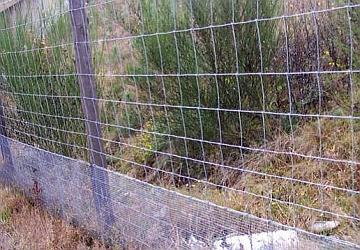 Figure 81. Fence combining fine and coarse mesh ( CLEVENGER & HUIJSER 2011 ). |
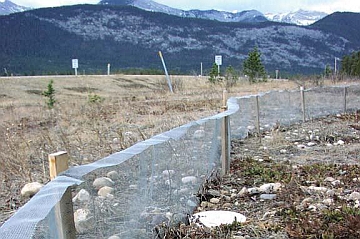 Figure 82. Fine-mesh fence for amphibians and reptiles (CLEVENGER & HUIJSER 2011). |
|
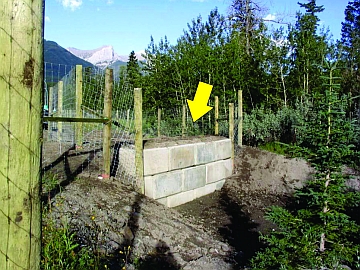 Figure 83. Fence with an escape ramp (arrow) allowing animals to return from the roadway to adjacent areas (CLEVENGER
& HUIJSER 2011). |
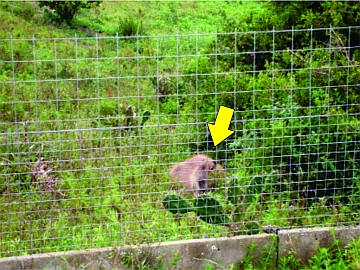 Figure 84. Capybara (arrow) blocked by a fence with progressively smaller mesh and a masonry base. BR-471/RS, Santa Vitória do Palmar. |
|
| Figure 83. Fence with an escape ramp (arrow) allowing animals to return from the roadway to adjacent areas (CLEVENGER & HUIJSER 2011). | Figure 84. Capybara (arrow) blocked by a fence with progressively smaller mesh and a masonry base. BR-471/RS, Santa Vitória do Palmar. | |
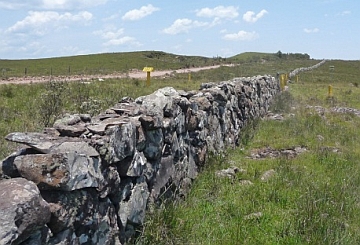 Figure 85. Stone fence along BR-285/RS, São José dos Ausentes, which can be adapted to prevent undesired wildlife movement. |
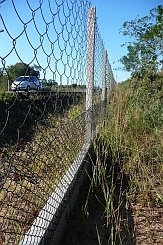 Figure 86. Fence with a concrete base and progressively sized mesh. BR-101/RS. |
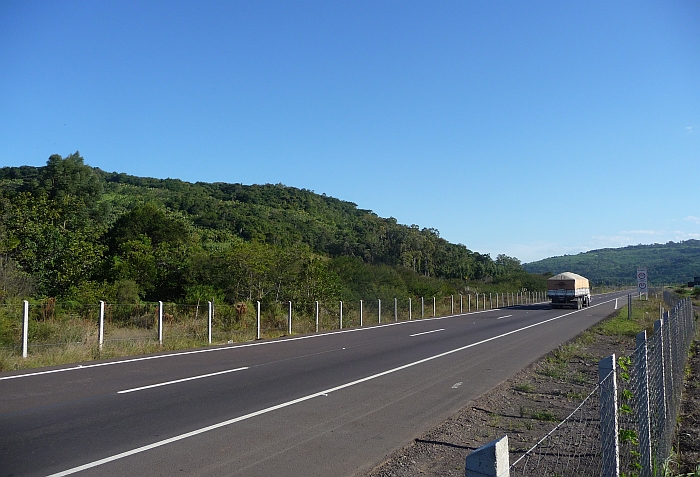 Figure 87. Fences installed on both sides of the roadway. BR-101/RS. |
 |
 |
|
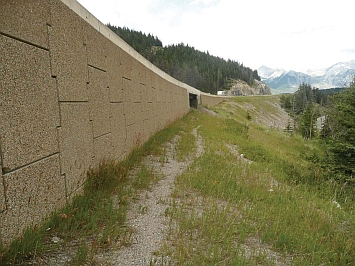
| Figure 88. Mechanically stabilized soil using structural geogrids, functioning as directional fencing (CLEVENGER & HUIJSER 2011). | Figure 89. Cattle grid installed to prevent animals from entering the fenced road section. BR-471/RS, Santa Vitória do Palmar. Photo: José Antonio Palmeiro Gudolle, NLA/IBAMA/RS. |
Population reduction
Population reduction is directed mainly at locally overabundant large animals that create serious traffic-safety risks. Possible approaches include controlled removal, fertility control, modification of habitat near the road and translocation. The effectiveness of translocation depends strongly on population isolation: where populations remain connected, removed individuals may return or vacant habitat may be recolonized.
These approaches require continuing management and can produce substantial ecological and animal-welfare consequences. Although reductions in collisions have sometimes been associated with population-control measures, the combined negative impacts mean that they are generally not recommended except under very specific circumstances (BECKMANN et al. 2010). In Brazil, their application is additionally constrained by limited population data and by wildlife-protection legislation, particularly restrictions on hunting established by Federal Law No. 9,605/1998.
Translation note: This English version was preliminarily translated using ChatGPT and has not yet undergone human review.