ENVIRONMENTAL LICENSING: STAGES
Three types of licenses are established by Article 19 of Federal Decree No. 99,274/1990: the Preliminary License (LP), issued during the preliminary planning stage and containing basic requirements to be met during project siting, installation and operation; the Installation License (LI), authorizing the beginning of construction in accordance with the specifications of the approved Engineering Design; and the Operating License (LO), authorizing, after the necessary verification, the beginning of the licensed activity and operation of its control measures as established in the Preliminary and Installation Licenses.
To obtain these licenses, the project proponent (in Brazil, generally the agency responsible for the federal road system—DNIT—or the corresponding state agencies) applies sequentially to the competent environmental authority (IBAMA or the corresponding state agency) and follows its specific procedure. Although secondary aspects may vary, the stages basically follow the workflow shown in Figure 3, adopted by IBAMA.
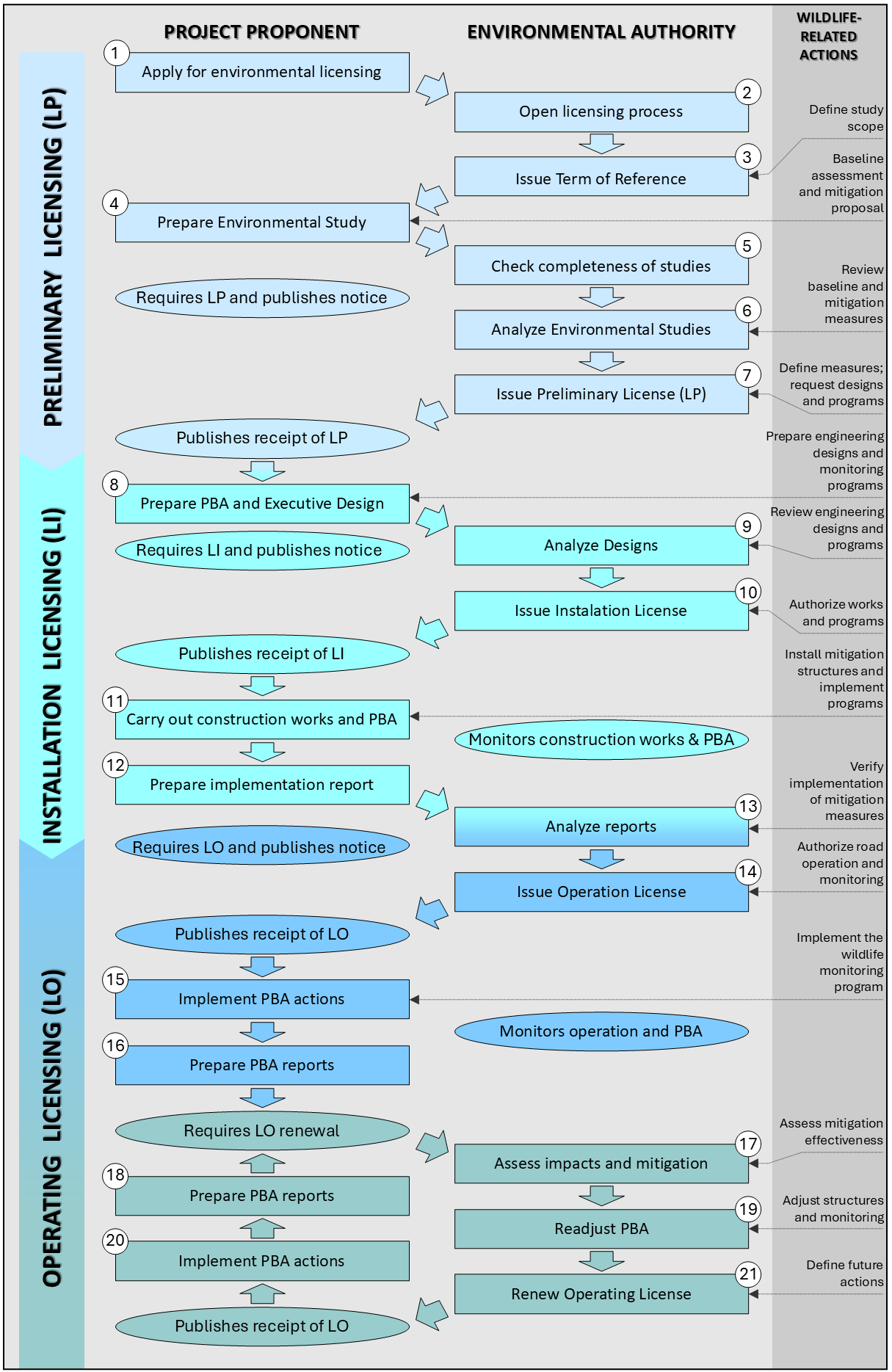
Figure 3. Workflow of the Federal Environmental Licensing process.
Regarding the numbered stages in Figure 3, the following observations apply:
1. The request to open a licensing process is submitted by completing the Process Opening Request Form (FAP) directly on the agency’s website, including a description of the project.
2. IBAMA formally opens the licensing process and electronically sends the corresponding process number to the proponent within a maximum of 10 days.
3. The Terms of Reference (TR) define the scope of the environmental studies. Preparation may require a project presentation by the proponent and a site inspection of the proposed project area. Relevant federal agencies (FUNAI, IPHAN and Fundação Cultural Palmares) and State Environmental Agencies (OEMAs) are consulted for contributions to the TR. The TR must be sent to the proponent within a maximum of 60 days after the process is opened.
4. The environmental study is prepared by a multidisciplinary technical team hired by the proponent. After receiving the TR, the study must be submitted to the environmental agency within a maximum of two years, otherwise the TR expires.
5. The submitted studies undergo a completeness check to verify whether all topics required by the TR have been addressed. The environmental agency has 30 days to perform this review. If the studies are not accepted, they are returned for adjustment to the TR, with publication of the corresponding Return Notice in the Federal Official Gazette.
6. Technical analysis of the studies is carried out by a multidisciplinary team of environmental-agency analysts. Site inspections are generally conducted to verify the information presented and support preparation of a conclusive Technical Opinion. The analysis period is 180 days (IBAMA Normative Instruction No. 184/2008). If deficiencies are identified, supplementary information is requested from the proponent and the analysis deadline is suspended until it is provided. Relevant federal agencies (FUNAI, IPHAN and Fundação Cultural Palmares) and State Environmental Agencies (OEMAs) are consulted regarding the studies.
7. After a conclusive Technical Opinion indicates feasibility, the environmental agency issues the Preliminary License, specifying its validity period, location, project characteristics and mitigation measures for the identified impacts. Its validity must be at least equal to the schedule for preparation of the Basic Environmental Plan (PBA) and project designs, and may not exceed five years.
8. The Basic Environmental Plan contains the Environmental Programs, which detail mitigation and monitoring actions. Together with the Engineering Design, the proponent must also submit the Environmental Compensation Plan for its Installation License application to be assessed.
9. Technical analysis of the designs is performed by a multidisciplinary team of environmental-agency analysts. The PBA is also sent to the relevant agencies for comment. The maximum analysis period is 75 days.
10. The Installation License authorizes construction in accordance with the Executive Design and subject to implementation of the Basic Environmental Plan. Analysis of these items must be documented in a conclusive Technical Opinion supporting the licensing decision. Its validity must be at least equal to the implementation schedule, up to a maximum of six years.
11. The proponent is responsible for implementing the PBA as approved in the licensing process.
12. The proponent submits interim and final reports on implementation of the PBA.
13. The environmental agency conducts inspections and analyses the reports on PBA implementation. The deadline for analysing the final report and preparing the Technical Opinion for the Operating License is 45 days.
14. The Operating License specifies operating conditions and establishes Environmental Programs for mitigation and monitoring during the road operation phase. Its issuance is also based on a conclusive Technical Opinion. It may be valid for four to ten years.
15. The proponent must implement the Environmental Programs included in the PBA as approved in the licensing process.
16. The proponent must periodically submit reports on implementation of the PBA.
17. The environmental agency must critically evaluate the results of the Environmental Programs and the mitigation measures implemented.
18. Based on the observed results, adjustments to the Environmental Programs and to project infrastructure are proposed.
19. Renewal of the Operating License specifies operating conditions and redefines the Environmental Programs for mitigation and monitoring to be implemented during the next road-operation period.
20. The proponent must implement the Environmental Programs included in the PBA as approved during renewal of the Operating License.
21. The proponent must periodically submit reports on implementation of the PBA.
Translation note: This English version was preliminarily translated using ChatGPT and has not yet undergone human review.